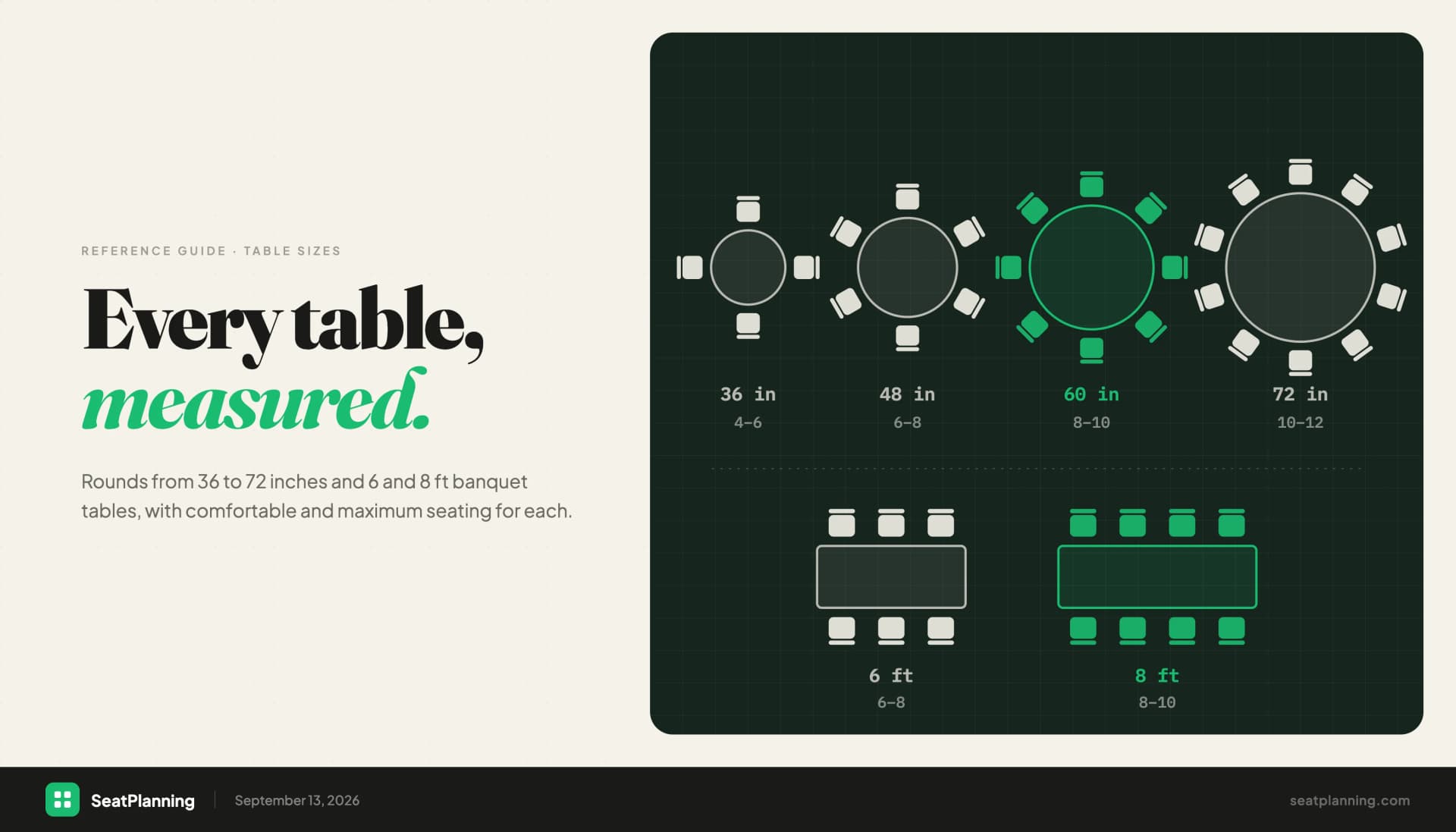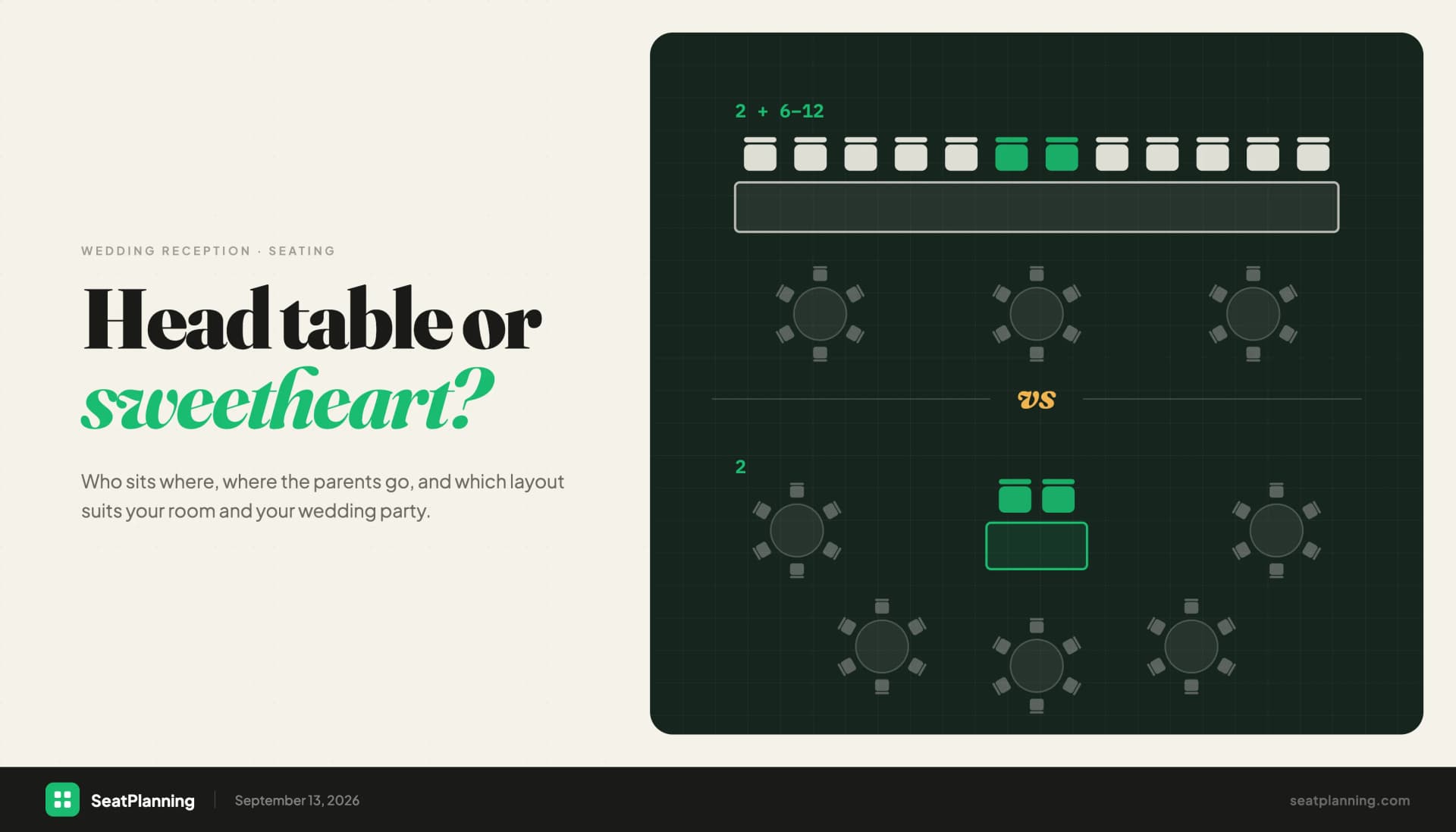
The real difference is not etiquette. It is that a head table seats on one side only, so it takes up two to three times the floor area per person of a regular guest table, and it decides who your wedding party spends their evening talking to.
Pick based on the room and the group. The traditions are flexible and mostly younger than people think.
The traditional head table order
A classic head table is one long rectangular run, everyone seated on the far side, facing the room. Nobody sits with their back to the guests.
Working outward from the middle:
- The couple at the centre, traditionally with the bride on the groom's right.
- The maid of honour beside the groom, and the best man beside the bride. The swap is deliberate: it puts each person next to someone they are not marrying, which historically kept the toasts moving.
- Bridesmaids and groomsmen alternating outward from there, so the line reads as mixed rather than two blocks.
Two details that matter more than the order:
Partners of the wedding party do not normally sit at the head table. There is rarely room, and a head table of couples becomes a second guest table rather than the wedding party. Seat them together at the nearest table so they have each other's company instead of sitting alone among strangers.
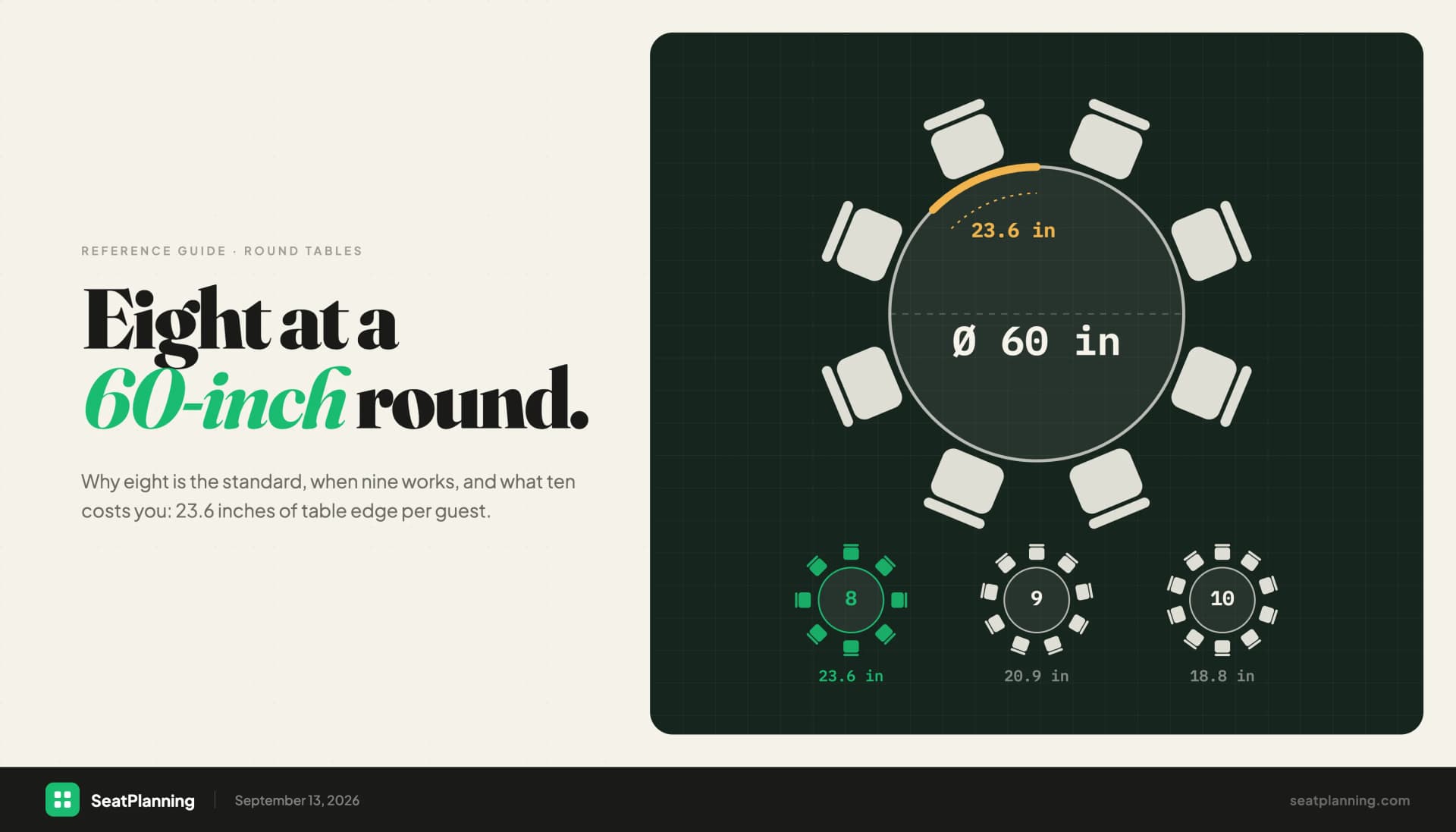
Count the length before you commit. Ten people seated on one side of a run of tables need about 20 feet of table, since each guest takes 24 inches of edge. That is two and a half 8-foot tables end to end, and it needs full service clearance behind it plus a clear sightline from the room. In a narrow venue this is often the constraint that makes the decision for you.
What a sweetheart table changes
A sweetheart table seats the two of you, and everything else follows from that.
What you gain. Your wedding party sit with their partners and their own friends, which most of them quietly prefer. You get a few minutes alone together in the middle of a day where you will otherwise not have any. Photographs of the two of you are much easier without eight people in frame. And you reclaim a large piece of floor, often enough for an extra guest table.
What you give up. Some couples find it isolating, particularly during the long gaps between courses. You are also visible for the entire meal in a way you are not at a head table, where the group absorbs some attention.
The practical fix for the isolation is placement. Put the sweetheart table close enough to the nearest tables that people can talk to you without standing up, rather than marooned in the middle of the dance floor.
Where the parents go
In both arrangements, the standard answer is the same: parents host their own tables near the couple, rather than sitting at the head or sweetheart table.
A parents' table usually includes the officiant, grandparents, and close family friends. Two tables, one per family, placed at equal distance from the couple, is the arrangement that causes the fewest conversations afterwards.
If parents are divorced, give each their own table and keep both at the same distance from you. Equal distance is what people read, not the order. If one parent has remarried, seat them with their spouse and give the other parent a table of their own close family or friends so neither table looks like the consolation one.
The family style head table is the exception. Here both sets of parents join the couple at one long table, and the wedding party sit with their partners. It works well at small weddings and at weddings where the two families already know each other. It works badly when the parents do not get on, because it puts them in each other's company for three hours with no escape.
Choosing between them
| Head table | Sweetheart table | |
|---|---|---|
| Seats | Couple plus 6 to 12 | Couple only |
| Floor space | 20+ ft of table run, one side only | One small table |
| Wedding party sit with | Each other | Their own partners and friends |
| Best for | Large weddings, close-knit wedding parties | Tight rooms, wedding parties with partners and children |
| Main drawback | Splits couples up for the meal | Can feel exposed or isolating |
A third option worth knowing: a king's table, a long table seating the couple and the wedding party on both sides, family style. It reads beautifully in photographs and uses floor space far more efficiently than a one-sided head table. The tradeoff is that half the party has their back to the room, so it only suits venues where the table is not the focal point of the speeches.
Building it
Whichever you choose, place it before anything else. The head or sweetheart table sets the orientation of the room, and the dance floor, the cake table and the top-table sightlines all resolve around it.
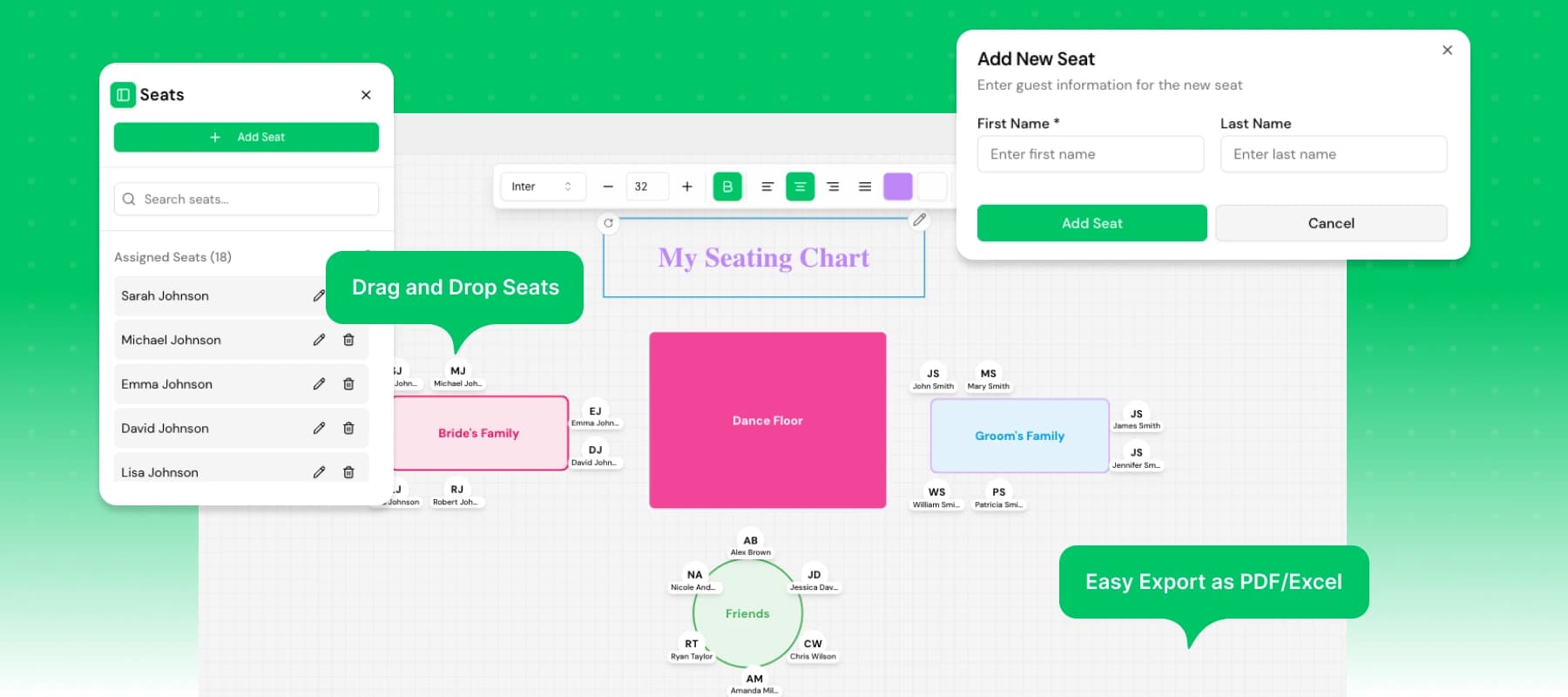
You can lay this out in our free seating chart maker, which draws tables at true scale so you can see whether a 20-foot head table actually fits before your venue tells you it does not. Once the shape of the room is settled, the 10 most common wedding seating chart mistakes covers what tends to go wrong next, and our guide to event table spacing has the clearances to leave behind a one-sided table.