A seating chart does two jobs. It tells 100 people where to go without a queue, and it is the first thing guests see when they walk in. It can be a laminated list, or it can be the thing that gets photographed.
This article is about the second job, the display, plus the names, layouts and seating rules that make the room feel considered. If you are still working out the basics, start with our wedding seating chart guide.
Work out the plan first, then pick the display
Do it in this order. A beautiful mirror with 14 names that have not been agreed yet is a very expensive way to have an argument. Build the plan in the wedding table plan tool, where you can move guests between tables until nobody is stuck next to an ex, and only then commission the display.
Then match the format to the room.
Seating chart display ideas
Framed board or mirror
A large mirror or framed board with names written in a paint pen is a classic that suits almost any style. Group names by table, in alphabetical order inside each table, and keep the lettering big enough to read from a metre away. Practical tip: mirrors reflect light, so put them away from windows.
Escort cards
Small cards, one per guest, each naming the table. They are easy to arrange in a fan, on a long table, in rows by table or pinned on a board. They are also the best choice when guests are seated at tables but not at specific chairs.
Hanging installation
Cards hung from a frame, branches or ribbons. It looks wonderful at a barn or garden venue, but it needs a strong fixing point and tends to be harder to read, so use it for under 60 guests or keep the names large.
Edible and tactile ideas
Cards attached to a glass of wine, a mini bottle, a macaron, a small plant or a favour. Guests keep the item and the seating chart stays out of the way. These work well as cocktail-hour ideas because they keep people moving.
Printed poster or sign
Cheap, clear and easy to update at the last minute. Use two copies at different sides of the room to avoid a bottleneck. Export your plan from SeatPlanning as a PDF and take it to a print shop.
Place cards at every seat
A card on every chair removes any confusion and is the right choice for a plated dinner with menu choices. It also needs the most work on the day, so give it to a friend to set up.
Table name ideas
Numbers are fine, and the caterer needs them anyway. But a theme turns the tables into a small story. Pick one theme and stay with it.
| Theme | Examples |
|---|---|
| Places | Streets you have lived on, cities you travelled to together, where you met |
| Wine and drinks | Grape varieties, cocktails, whiskies, local brews |
| Music | Songs from your first dance, albums, bands you saw together |
| Films and books | Titles you quote, favourite characters, series you watched |
| Nature | Flowers from the bouquet, trees, herbs, mountains |
| Memories | First date, first holiday, proposal, first flat |
| Food | Favourite dishes, cheeses, desserts |
Rules that keep names useful:
- Keep it short. One or two words. Guests read them while carrying a drink.
- Print a small number as well. Staff and caterers work from numbers.
- Avoid names that rank. "Paris" and "Table with the cousins" send different messages.
- Make it consistent. All places, or all songs. Mixing is confusing.
A personal touch: add one line on each table, such as "Where we got engaged", so the name becomes a conversation starter. The table with a story gets more mingling than the table with a number.
Layout ideas
Long banquet tables
One or two very long tables feel like a family meal. Everyone can talk across the table and the room looks beautifully symmetrical. The trade-off is that you can only talk to your neighbours, and seating the wrong two people together can't be hidden. Allow about 60 cm of table edge per person.
Mixing round and rectangular tables
Rounds are sociable for groups of 8 to 10, and rectangles save space along walls. A common pattern is a long table for the couple's closest family and rounds for everyone else. The mix also helps the room feel less like a conference.
Clusters and open floor
Place tables in loose clusters rather than a rigid grid, with an open lane to the dance floor and the bar. Leave about 1.5 m between table edges so chairs can be pulled out and servers can pass. Our table spacing standards give exact numbers, and the seating layout guide compares six arrangements.
The top table
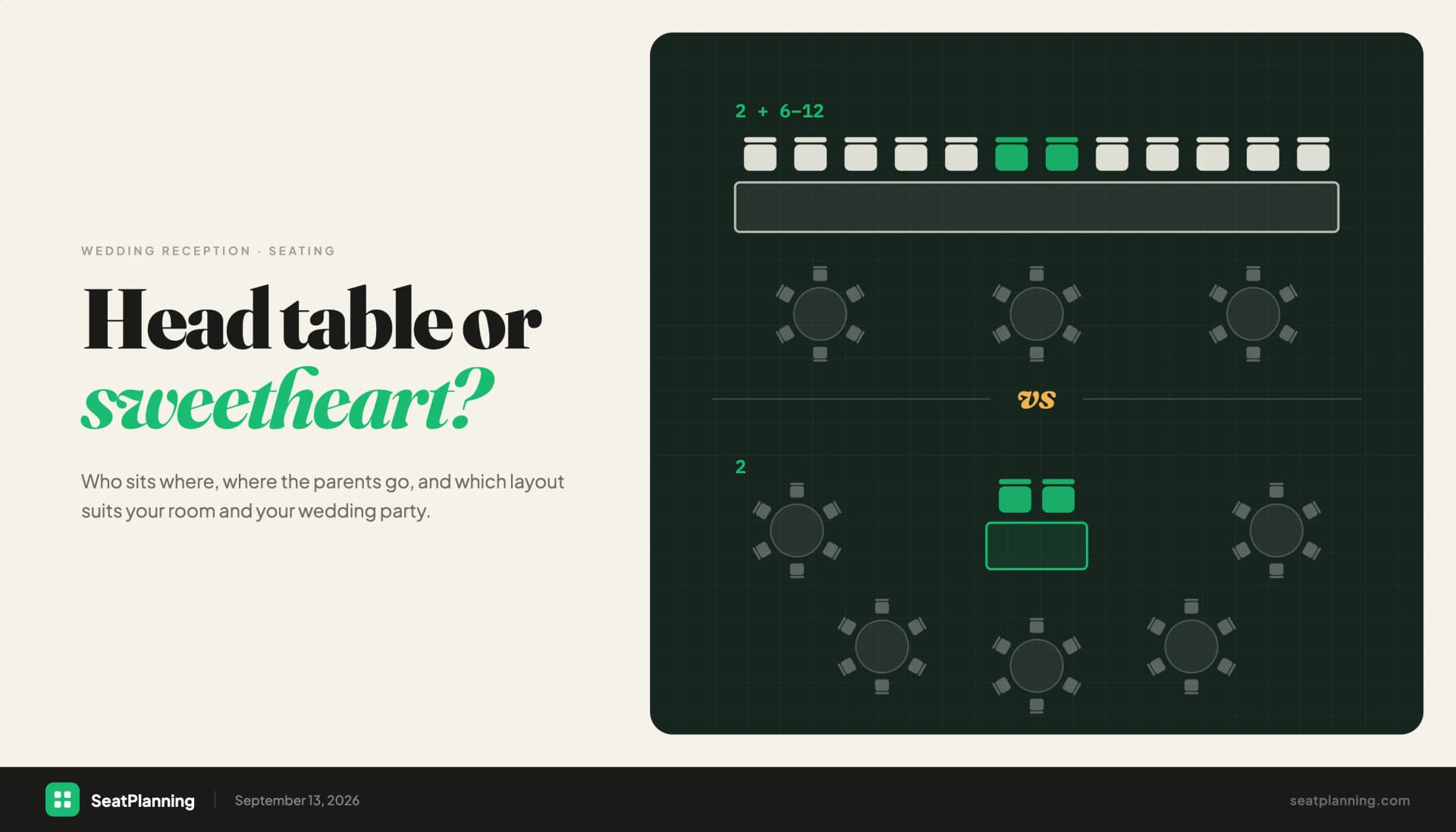
Options include a classic head table, a sweetheart table for two, or sitting with your guests. See head table versus sweetheart table for the trade-offs, including where the wedding party's partners go.
Simple rules for who sits where
- Start with anchors. Place parents and the closest family near the couple, then the wedding party.
- Group by link. Colleagues together, school friends together, family branches together.
- Split the cliques. Two friend groups that are comfortable together can become one loud table. Mixing them lightly makes the night more lively.
- Protect the quiet guest. Seat anyone who knows nobody beside someone friendly, not at an empty table.
- Put the loud and the elderly apart. Keep tables near the speakers for those who enjoy the music, and quieter ones for those who want conversation.
- Seat children thoughtfully. Either with parents or together at a table with an activity, but not on their own.
- Keep couples together. Always seat partners at the same table, even if you rotate others.
- Have a plan for the awkward. For divorced parents or feuding relatives, give each a table equidistant from the couple.
Make it easy on yourself
Keep the plan flexible until the RSVP deadline, since a single late reply can move a whole table. If you are still collecting answers, our wedding guest list and RSVP guide shows how to run it, and the free seating chart maker lets you test layouts for up to 40 guests at no cost. When the plan is final, export a PDF for the venue and print your display from the same file, so what guests see matches what the staff have.