Psihologia așezării: de ce contează atât de mult unde stai
Majoritatea mirilor și organizatorilor tratează planul de așezare ca pe o problemă de logistică: cine încape unde. Cercetările din psihologia mediului spun însă altceva: locul în care stă cineva influențează direct cum se simte, cât vorbește și dacă pleacă mai devreme.
Iată ce spun știința (și experiența) despre așezare și cum poți folosi asta intenționat.
1) Efectul centrului sălii: vizibilitatea schimbă comportamentul
Invitații așezați în centrul sălii se simt mai observați. Această conștiință socială crescută îi face mai vorbăreți și mai implicați, sunt „pe scenă” într-un mod discret.
Invitații de la margini sau din colțuri se simt mai retrași. Au mai multe conversații intime, unu la unu, dar sunt și mai predispuși să se deconecteze sau să plece devreme spre bar.
Soluție rapidă: Pune mesele cele mai sociabile (grupuri de prieteni, colegi energici) în centru. Așază invitații care s-ar putea simți incomod în mulțime, rudele în vârstă sau persoanele cu anxietate socială, mai aproape de pereți, unde se simt mai puțin expuse, dar tot incluse.
2) Mese rotunde sau dreptunghiulare: cine vorbește de fapt cu cine
Forma mesei nu e doar o alegere estetică, ci stabilește geometria conversației.
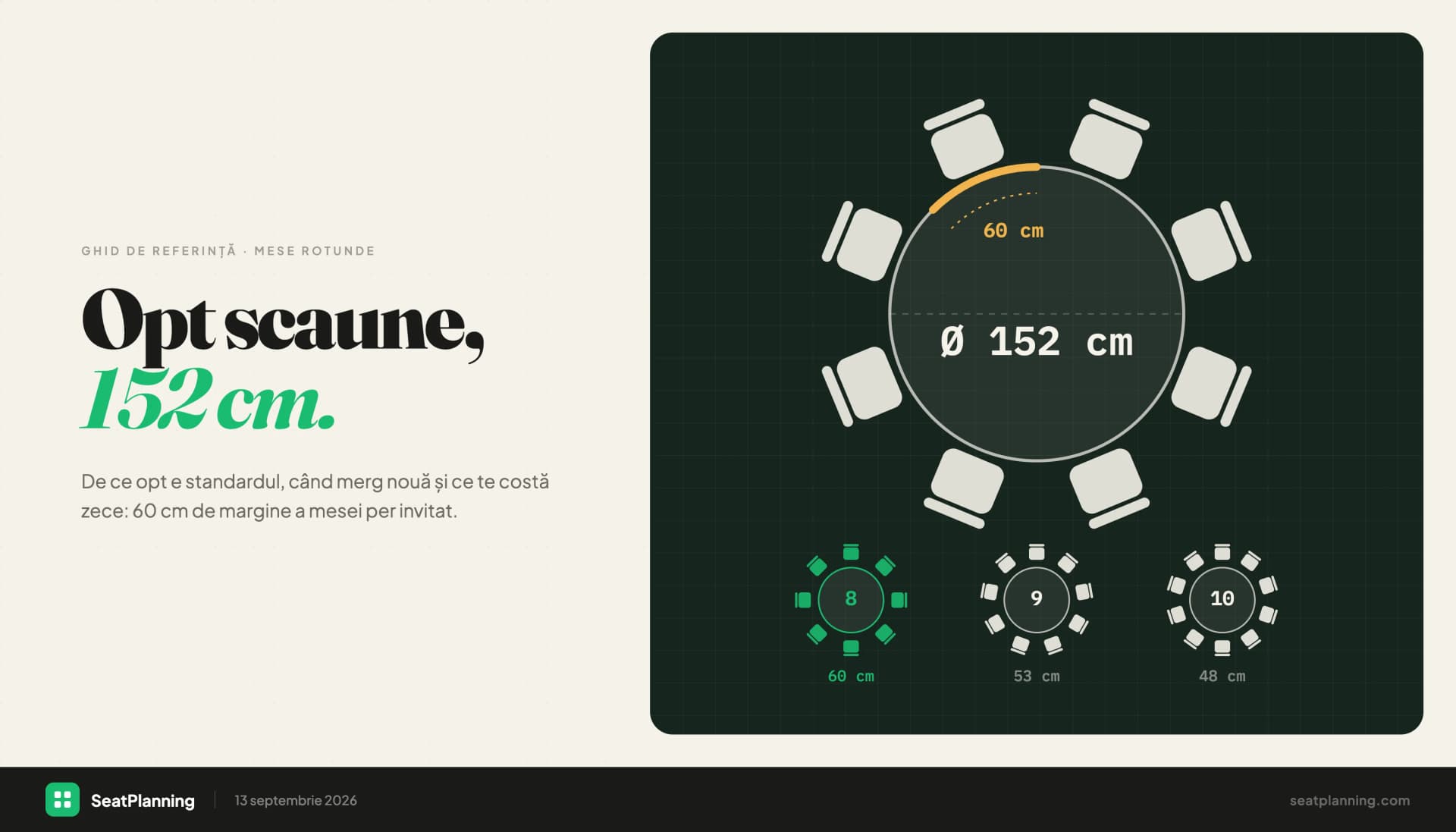
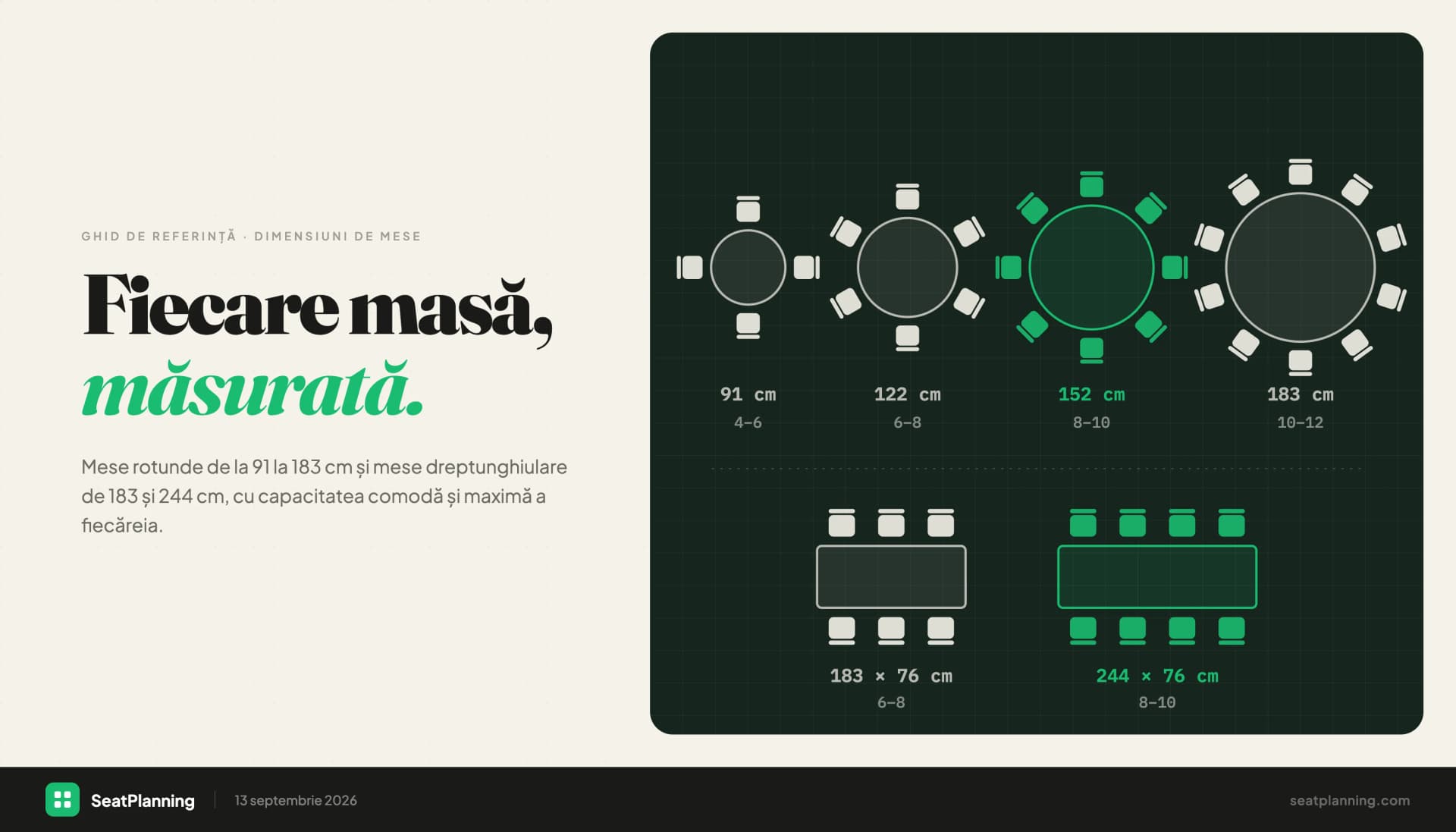
La o masă rotundă de 150 cm (6 până la 8 invitați), toată lumea poate face contact vizual cu toată lumea. Conversațiile curg liber peste masă. Necunoscuții devin cunoștințe.
La o masă dreptunghiulară lungă, conversațiile rămân laterale, vorbești cu cei de lângă tine și cu cei din fața ta, dar rareori cu cineva aflat la trei locuri distanță. O masă dreptunghiulară de 10 persoane devine practic două sau trei grupuri izolate.
Soluție rapidă: Folosește mese rotunde când vrei amestec (evenimente de networking, grupuri mixte de familie). Folosește mese dreptunghiulare când grupul se cunoaște deja bine și se organizează singur.
3) Efectul de proximitate: regula de 1,2 metri
Psihologul Robert Sommer a identificat un tipar constant: oamenii conversează natural cu cei aflați în raza de 1,2 metri. Peste distanța asta, conversația încetează să mai pară firească.
De asta nu e suficient să pui la aceeași masă două persoane pe care vrei să le reapropii, veri care nu s-au mai văzut sau vechi colegi de facultate. Contează unde anume la masă. Două locuri distanță la o masă rotundă e în regulă. Peste o masă dreptunghiulară de 240 cm e aproape un zid.
Soluție rapidă: Dacă vrei să întărești sau să repari anumite relații, așază acei invitați unul lângă altul, nu doar la aceeași masă.
4) Efectul umăr la umăr
Așezarea față în față, când doi oameni se privesc direct, creează o dinamică ușor confruntațională. De aceea interviurile de angajare și negocierile dificile au loc peste un birou.
Așezarea alături sau în unghi (cum e unghiul de 120° dintre vecinii de la o masă rotundă) elimină tensiunea. Conversațiile par mai colaborative și mai puțin evaluate.
Soluție rapidă: Dacă așezi doi membri ai familiei cu un istoric tensionat, părinți divorțați sau frați certați, evită să îi pui direct față în față. Locurile alăturate la o masă rotundă generează mult mai puțină fricțiune.
5) Zone de zgomot și oboseală mentală
Studiile despre acustica restaurantelor au arătat că un zgomot de fond peste 65 dB scade atât buna dispoziție, cât și performanța cognitivă. Lângă DJ, formație sau boxe, invitații nu pot susține conversații complexe, ajung să strige fraze scurte.
Invitații în vârstă și cei cu aparate auditive suferă cel mai mult. Dar chiar și cei tineri și sănătoși obosesc mai repede în zonele zgomotoase.
Soluție rapidă: Fă-ți o hartă a zgomotului înainte să repartizezi mesele. Boxele proiectează sunetul în con, iar cele 2 sau 3 mese aflate exact în față primesc cel mai mult zgomot. Acolo așază invitații tineri și energici. Pune părinții mirilor, bunicii și invitații cu sensibilitate auditivă la cel puțin 6 metri de orice boxă.
6) Efectul apropierii de ieșire: cine pleacă primul
Invitații așezați lângă intrări și ieșiri sunt statistic mai predispuși să plece devreme. Nu e lipsă de politețe, ci condiționare. Ușurința fizică de a pleca elimină fricțiunea socială care îi ține pe oameni pe scaune.
Un studiu despre participarea la conferințe a arătat că cei din spate, cel mai aproape de ieșire, aveau o probabilitate semnificativ mai mare să plece înainte de final.
Soluție rapidă: Dacă vrei anumiți invitați prezenți la momentele-cheie, discursuri, primul dans, tăierea tortului, nu îi așeza lângă ușă. Pune mesele care „sigur rămân până târziu” aproape de ringul de dans și departe de ieșiri.
7) Efectul mesei prezidiului: putere sau căldură
Locul în care îi așezi pe cei mai importanți invitați transmite un statut, și lor, și celorlalți. O masă a mirilor ridicată pe un podium amplifică efectul: cei expuși se simt onorați, dar și priviți, ceea ce crește și energia, și emoția.
Alternativa preferată de multe cupluri moderne: fără masă ridicată. În schimb, mirii stau la o masă rotundă centrală, înconjurați de oamenii cei mai apropiați. Asta creează căldură în loc de ierarhie.
Soluție rapidă: Dacă alegi o masă a mirilor clasică, limiteaz-o la 4 până la 6 persoane. Mesele lungi, unde rude îndepărtate sunt așezate „pentru statut”, îi fac pe acei invitați să se simtă incomod și arată stângaci în fotografii.
8) Pune la fiecare masă un liant social
În orice grup există cineva care ține conversația vie, reține numele și face prezentările. La o masă de necunoscuți sau aproape necunoscuți, prezența acestei persoane face diferența dintre o oră stânjenitoare și o seară memorabilă.
Soluție rapidă: Identifică 2 sau 3 astfel de oameni în lista ta de invitați și distribuie-i la mesele cele mai dificile: masa unde ai amestecat două grupuri de prieteni, masa numai cu colegi, masa rudelor îndepărtate. Nu îi aduna pe toți sociabilii la aceeași masă.
Pune psihologia la treabă
Să înțelegi psihologia așezării nu înseamnă să îți transformi planul într-un experiment social. Înseamnă să faci alegeri mici și intenționate, rotund în loc de dreptunghiular pentru grupurile mixte, centru pentru mesele energice, alături în loc de față în față pentru perechile sensibile, care se adună într-o petrecere de care toată lumea chiar s-a bucurat.
SeatPlanning îți permite să tragi, să schimbi și să reorganizezi până când așezarea se simte potrivită. Fără tabele, fără notițe lipite, doar o imagine clară cu cine unde stă și de ce.
Începe planul tău de așezare gratuit →
Întrebări frecvente
Chiar contează forma mesei pentru felul în care interacționează oamenii?
Da. Mesele rotunde creează conversații deschise, în toate direcțiile, fiindcă toată lumea se vede. Mesele dreptunghiulare canalizează conversația lateral, vorbești cu vecinii imediați, nu cu invitații aflați mai departe.
La ce distanță pot sta invitații și să aibă totuși o conversație naturală?
Cercetările lui Robert Sommer arată că o conversație pare firească pe o distanță de aproximativ 1,2 metri. Dincolo de asta, o discuție susținută cere efort și tinde să se stingă. De aceea contează locul exact la masă, nu doar masa în sine.
Îmi așez invitații lângă ringul de dans sau departe de el?
Aproape de ring merge bine pentru invitații care sigur vor dansa, fiindcă scade bariera de a se ridica. Pentru cei care nu dansează, zgomotul și mișcarea pot obosi. Pe aceștia așază-i mai spre margini sau departe de boxe.
Ce fac cu invitații care au un istoric de conflict?
Așază-i la mese diferite, ideal fără să se vadă direct unul pe celălalt. Dacă trebuie neapărat să stea la aceeași masă, evită să îi pui față în față, iar locurile alăturate la o masă rotundă generează mult mai puțină fricțiune.
Ce este efectul apropierii de ieșire?
Invitații așezați lângă intrări și ieșiri tind să plece mai devreme, fiindcă ușurința fizică de a pleca reduce fricțiunea socială care de obicei îi ține pe oameni pe scaune. Așază mai departe de ieșiri invitații pe care îi vrei prezenți la momentele importante.