How to Make a Wedding Seating Chart
The wedding seating chart (in the UK, the table plan or wedding seating plan) is the task most couples put off the longest, and it's the one that causes the most last-minute stress. It's not because it's hard — it's because you can't start it until the RSVPs are in, and by then the wedding is close.
This guide walks through the whole process: when to start, how many tables you actually need, where everyone goes, and what to do about the genuinely awkward cases. You can build along with it in the free seating chart maker — no signup required.
⏱️ When to Start Your Wedding Seating Chart
Work backwards from the wedding date:
| When | What to do |
|---|---|
| 3 months out | Send invitations, set your RSVP deadline |
| 6 weeks out | RSVP deadline lands here — not later |
| 3–4 weeks out | Chase non-responders, then build the first draft |
| 2 weeks out | Confirm the final layout with your venue and caterer |
| 1 week out | Print escort cards, table numbers, and the display chart |
The single biggest mistake is setting the RSVP deadline too close to the wedding. Give yourself a two-week buffer between the deadline and the day you need a final chart, because roughly 10–15% of your guest list will need chasing.
🔢 How Many Tables Do You Need?
Start with the table shape, because it changes your count:
| Table | Typical capacity | Best for |
|---|---|---|
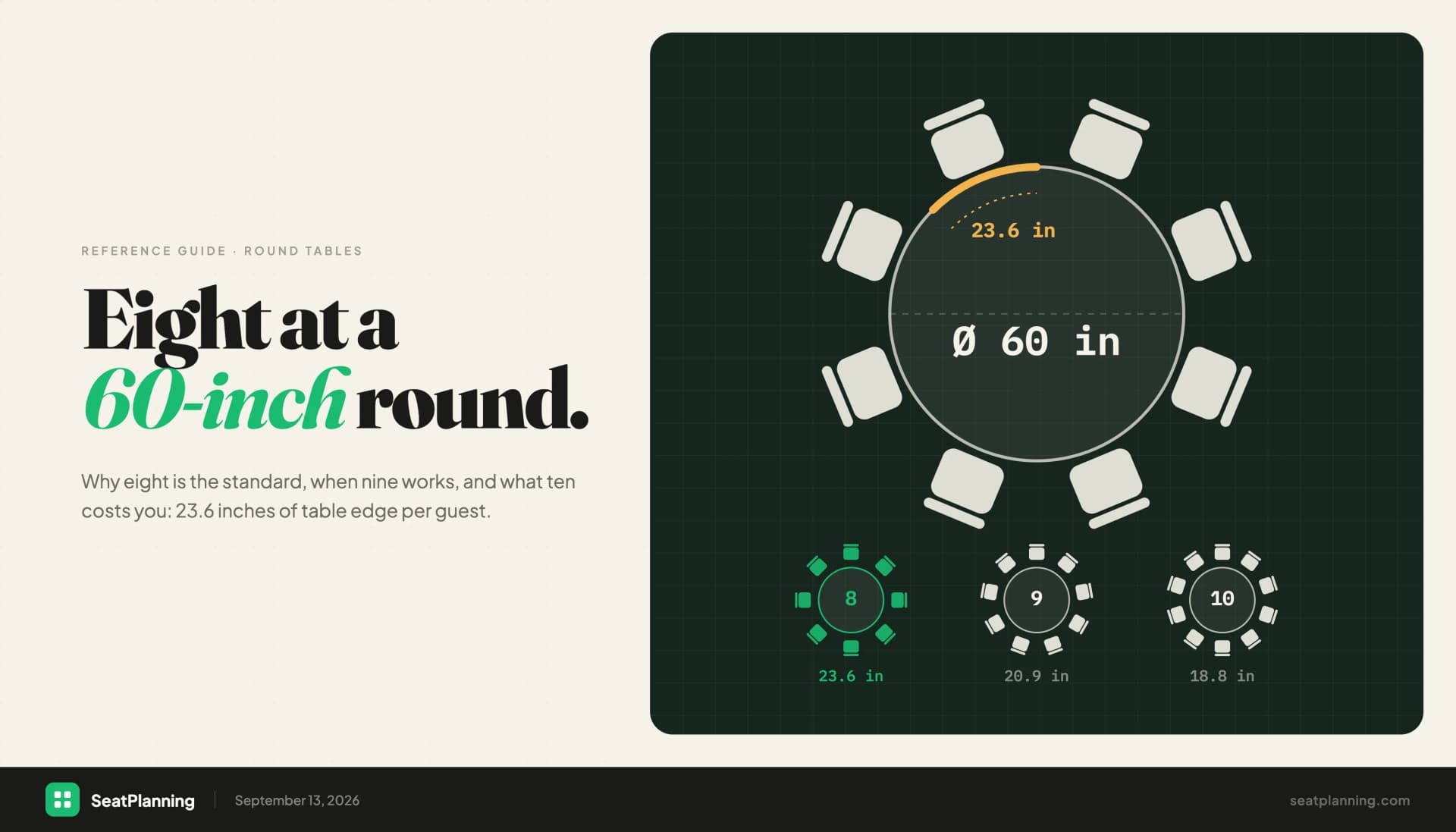
| Round (60" / 152cm) | 8 guests | The standard reception table |
| Round (72" / 183cm) | 10–12 guests | Larger weddings, fewer tables |
| Rectangular (8ft) | 8–10 guests | Long-table or banquet looks |
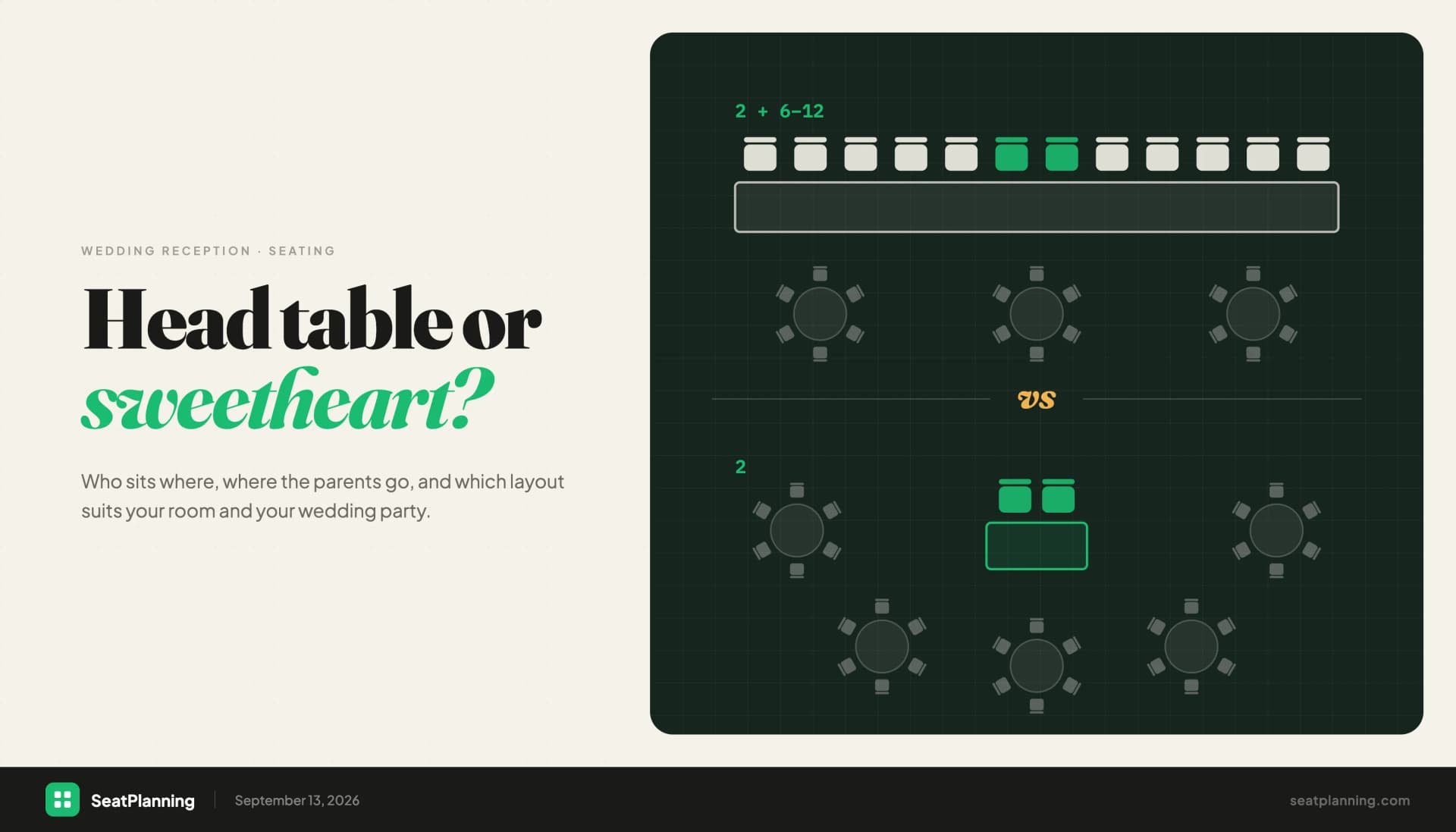
| Sweetheart table | 2 | Just the couple |
| Head table | 6–20 | Couple plus wedding party |
The quick math: guest count ÷ seats per table, then add one spare table. For 120 guests on 60" rounds, that's 120 ÷ 8 = 15 tables, plus one = 16. The spare absorbs late RSVPs and last-minute reshuffles, and it costs far less than discovering you're short on the day.
Don't forget to leave floor space for the dance floor, DJ or band, cake table, gift table, and bar. A layout that fits mathematically can still fail physically — which is why it's worth drawing it against your venue's real dimensions rather than assuming.
💺 Where Does Everyone Sit?
The couple
Three options, and there's no wrong answer:
- Sweetheart table — just the two of you. Most privacy, best photos, and you'll actually get to talk to each other.
- Head table — you plus the wedding party, usually facing the room. Traditional and social, but it splits couples up if partners aren't in the party.
- Joining a regular table — increasingly common, especially for smaller weddings. Feels relaxed and informal.
Parents and close family
The traditional arrangement puts both sets of parents together at one table near the couple, along with grandparents and officiant. In practice, many couples give each set of parents their own table so they can sit with their own extended family and friends. This is also the diplomatic answer when families don't know each other well.
Everyone else
Seat by connection, not category. Grouping "all the work friends" together sounds tidy but often produces a table of people who only ever see each other in meetings. Instead, look for genuine overlaps — the university friends who still holiday together, the cousins who are close in age.
A few working rules:
- Keep couples together. Splitting up partners reads as a snub, no matter how good your reasoning.
- Never make a "leftovers" table. Guests can tell instantly, and it's the thing they'll remember.
- Mix, but give everyone an anchor. Each guest should know at least two or three people at their table.
- Put the liveliest tables near the dance floor and the quieter ones — older relatives, families with small children — further from the speakers.
😬 The Awkward Cases
Divorced parents. Separate tables, equal distance from the couple. Equal proximity matters more than the exact seat; anything that reads as ranking one parent over the other will be noticed.
Guests who don't know anyone. Seat them with your most welcoming friends — the ones who start conversations. Never cluster all your solo guests at one table, which makes the arrangement obvious.
Plus-ones you've never met. Seat them with their partner, obviously, and at a table where the conversation flows easily rather than one with heavy in-group history.
Children. Under about 10, keep them next to their parents. Older kids and teenagers often do better at their own table, if you have enough of them to fill one.
People who fell out. Different tables, out of each other's sightlines if you can manage it. Don't seat them back-to-back and hope.
🪧 Seating Chart vs. Escort Cards vs. Place Cards
These three get used interchangeably, and they're not the same thing:
- Seating chart — one large display at the reception entrance listing every guest and their table number. Efficient, and cheaper than printing individual cards. In the UK this display is usually called the table plan, and our wedding table plan maker is set up for it.
- Escort cards — individual cards, usually on a table at the entrance, each naming a guest and their table. More elegant, easy to update late.
- Place cards — cards at the actual place setting, assigning a specific seat rather than just a table. Necessary for plated dinners with meal choices.
Most weddings use a seating chart or escort cards for table assignment, then place cards only if the caterer needs to know who ordered what. Assigning tables but not specific seats is the sweet spot for most receptions — it gives structure without micromanaging.
📤 Building and Sharing the Chart
Once the plan is settled, you need it in a form your venue, caterer, and stationer can actually use:
- Lay out the room — drop in tables matching your venue's real floor plan, plus the dance floor, bar, and stage
- Import your guest list from a spreadsheet rather than typing 120 names twice
- Seat guests by dragging them into place, adjusting as the last RSVPs land
- Export a PDF for the venue and caterer, and a spreadsheet for your stationer
- Share a link with your partner or planner so you're not emailing versions back and forth
SeatPlanning handles all five, and can also collect the RSVPs themselves — so responses feed straight into the chart instead of living in your inbox. See the help center for detailed guides.
Rather not start from a blank canvas? Open a 100-guest wedding seating chart template with the tables and seats already placed, or browse all the seating chart templates.
✅ Final Checklist
- RSVP deadline set at least 6 weeks before the wedding
- Final headcount confirmed, including vendors who need meals
- Table count includes one spare
- Layout checked against the venue's real dimensions
- Couples seated together
- No table of strangers
- Accessibility needs accounted for — step-free routes, space for wheelchairs
- Dietary requirements recorded against the right seats
- Chart shared with venue, caterer, and planner
- Escort cards or display chart printed
Related Reading
- 10 Wedding Seating Chart Mistakes (and How to Avoid Them)
- Our Wedding Seating Chart Experience (And What We Learned)
- Seating Arrangements Decoded: 6 Layouts & When to Use Them
👉 Start your chart now with the free seating chart maker, or create an account to collect RSVPs and invite your planner.